Spotlight on Sierra Leone
Governance progress, educational reform momentum, and rural reality.
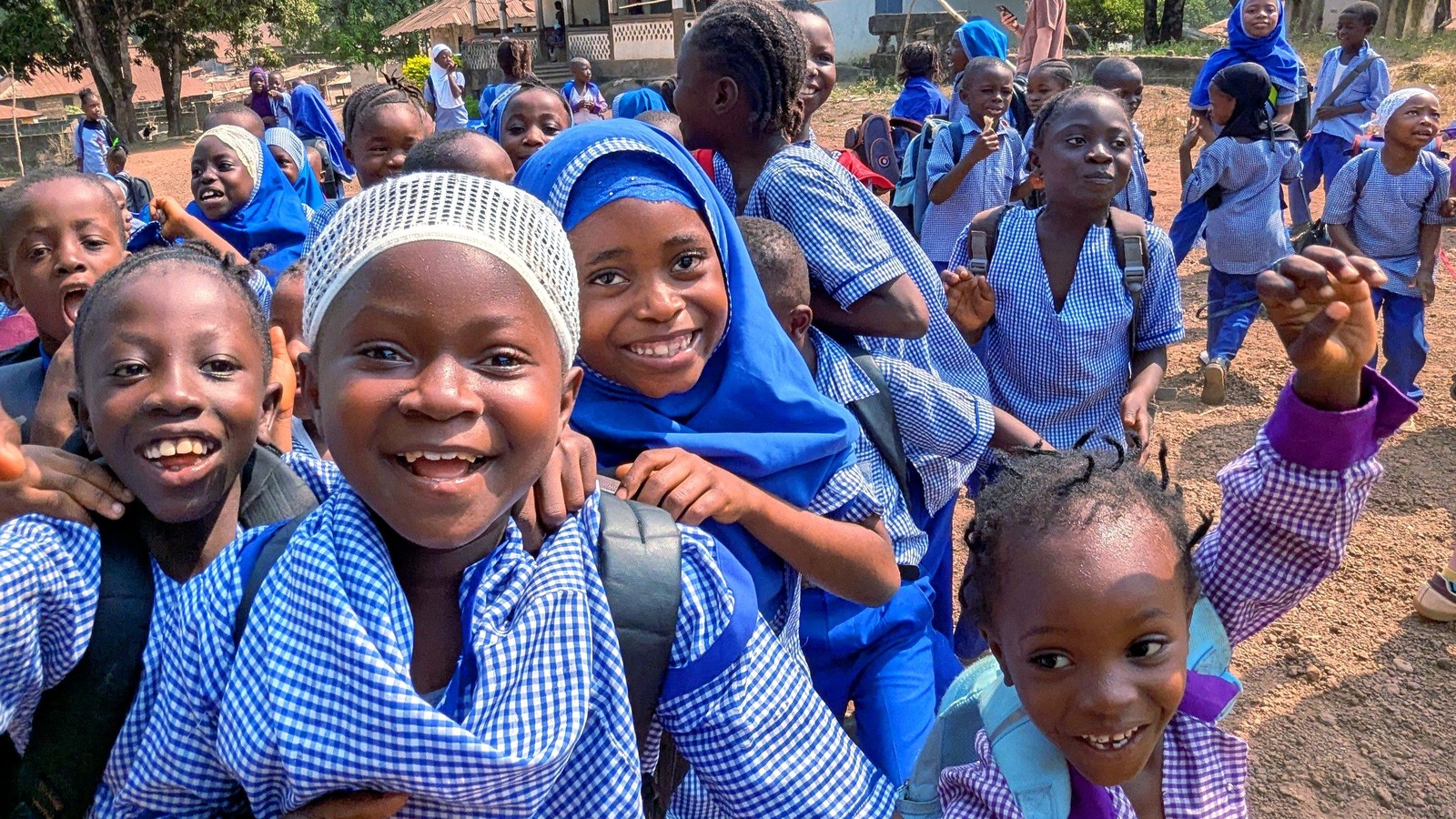
Sierra Leone is experiencing some of the most notable governance and educational improvements in Africa. Concurrently, rural communities face immense infrastructural deficits: without electrical grids or permanent classrooms, our partnerships create maximum leverage where need is greatest.
Ibrahim Index of African Governance (IIAG) & Reforms
Empirically verified: Sierra Leone stands out through rigorous governance reforms and historic education milestones.
Improvement across all 16 governance subcategories
Alongside Seychelles, Sierra Leone is one of only two nations among all 54 African countries to record verified improvements across all 16 subcategories of the Ibrahim Index of African Governance.
Ranked #23 in Africa – ahead of Egypt
With an Overall Governance Score in the upper quartile, Sierra Leone ranks ahead of established economies like Egypt, demonstrating political stability and structural reforms.
Largest education progress in Africa (2014–2023)
Over the 2014–2023 decade, no African nation achieved greater gains in education access and indicators. The landmark 'Free Quality School Education' (FQSE) initiative brought millions into schooling.
Pioneering progress in gender equality
Through the Gender Equality and Women’s Empowerment Act and nationwide child marriage prohibitions, rights of girls have been strengthened; pregnant students are fully guaranteed the right to schooling and national exams.
Rural Incomes & Purchasing Power (Objective Context)
To understand Sierra Leone objectively without paternalistic pity, concrete economic data is essential: In rural areas, families relying on subsistence farming (rice, cassava, palm oil) and day labor typically earn an income equivalent to €30 to €60 per month (often under $1.50 to $2.00 USD per day). The national statutory minimum wage is set at 800 New Leone (NLE), approximately €35 to €40.
Under these local conditions, municipal funding for rural school buildings is practically non-existent. Communities often start schools under temporary thatch or unbaked mud structures vulnerable to tropical storms. Against this economic backdrop, charitable funding achieves extraordinary leverage: a teacher stipend of €100/month or €15,000 for permanent engineered masonry classrooms transforms an entire village across generations.
Sierra Leone in African Continental Comparison
Peace & Democratic Stability
Since 2002, Sierra Leone has achieved peaceful transfers of power through regular democratic elections. Unlike neighboring Sahel regions, the country experiences zero military coups and zero insurgent violence.
Global Role Model for Religious Harmony
Sierra Leone is recognized globally as a model of interfaith harmony: Muslims (approx. 77%) and Christians (approx. 22%) live side by side in deep cohesion. Intermarriages are widespread; Christian and Muslim celebrations are shared community festivals.
Reform Drive vs. Infrastructure Gap
While educational reforms in many nations stall from lack of political will, Sierra Leone's government allocates over 20% of its national budget to education. The primary bottleneck is physical rural infrastructure—the exact gap filled by our school projects.
Practical Information for Travelers & Delegations
Essential guidance for participants of our educational journeys and visitors:
Safety & Travel Advice (German Federal Foreign Office)
The German Federal Foreign Office (Auswärtiges Amt) evaluates travel to Sierra Leone as safe and viable. Sierra Leone is among the warmest, most hospitable, and peaceful countries in West Africa, with no country-specific travel bans in place.
Standard precautions for developing regions apply: Avoid displaying valuables openly, and avoid rural road transit at night due to unlit vehicles and potholed surfaces. Our educational journeys are conducted in full coordination with Paramount Chiefs and regional police, using dedicated chartered minibuses and veteran professional drivers.
🚗 Road Conditions & Infrastructure
Primary arterial highways connecting Freetown, Makeni, and Magburaka are paved and in solid condition. Secondary rural village tracks (such as to Mafabaneh or Mamoru) consist of unpaved red laterite earth. During the dry season, these roads are dusty but fully navigable by our chartered coaches.
☀️ Climate & Season (Dry Season)
Sierra Leone has a tropical climate marked by a dry season (November to May) and a rainy season (June to October). We travel strictly during the dry season: daytime temperatures range between 28°C and 34°C with pleasant evening cooling. The dry continental Harmattan wind lowers humidity in the interior.
💶 Currency & Cash (New Leone - NLE)
The national currency is the New Leone (NLE). Sierra Leone operates almost entirely on cash. Credit cards are accepted only in a handful of Freetown hotels. ATMs in rural areas are scarce. We exchange cash (crisp, undamaged EUR or USD bills) seamlessly on arrival through verified partners.
Experience or Support Sierra Leone
Learn more about our educational journeys or support grassroots school construction directly.