Sierra Leone Educational Journey 2026: In-Depth Account, Cultural Encounters & Milestones
A comprehensive pedagogical and reflective account by Philipp Herzberg following the 2026 educational expedition through Sierra Leone: from village immersion in Masingbi to school construction and diplomatic dialogue in Freetown.
🎬 Documentary Film: Educational Journey 2026
Experience the journey in motion: authentic footage of school builds, rural roads, village encounters, and cultural exchange.
1. Core Philosophy & Educational Purpose
The 2026 educational journey to Sierra Leone was designed to foster intercultural understanding through direct encounters with local communities, participation in everyday village life, and engagement with ongoing educational development projects. Organized by Bildung mit Herz Sierra Leone e.V., the journey brought together international visitors and Sierra Leonean partners to experience the country beyond conventional tourism. At the heart of the initiative is the conviction that meaningful international relationships develop through shared experiences, mutual learning, and sustained cooperation on an equal footing, rather than observing communities from a distance. The program unites three interconnected pillars: 1. Intercultural education, 2. Sustainable educational development, and 3. Long-term international cooperation.
2. Visiting Educational Projects: Schools as Community Covenants
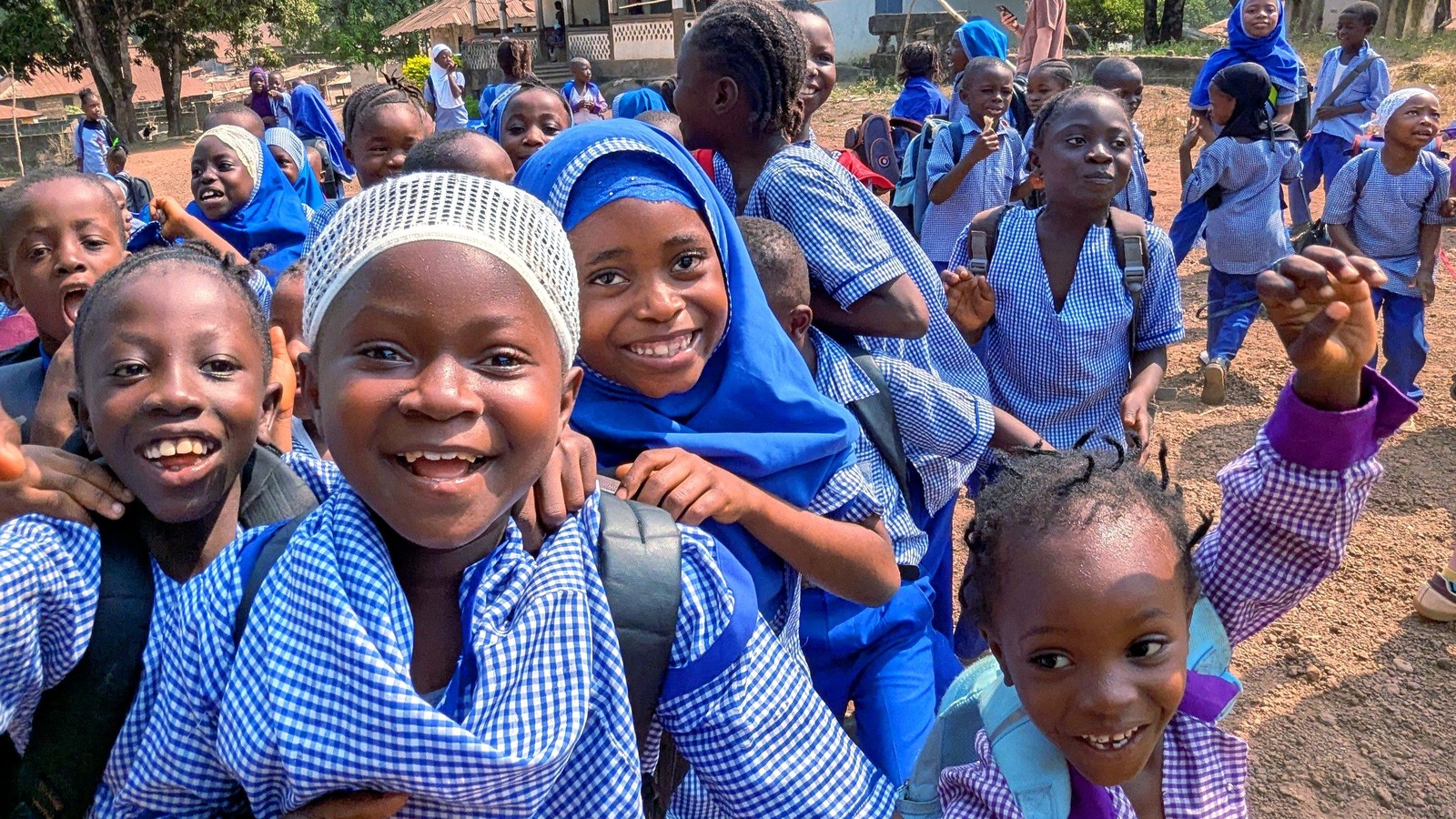
An essential component of the journey was visiting the educational communities of Mamoru and Mafabaneh. These visits linked the journey with tangible on-the-ground progress: in Mamoru, five solid classrooms stand with permanent roofs and sturdy wooden desks for 85 pupils (funded through private support). In Mafabaneh, the visionary circular learning hub designed by Tchoban Voss Architekten (German Design Award 2027 Winner) is under way, with site perimeters marked and 2,000 interlocking earth bricks produced. School construction is fundamentally understood not merely as physical infrastructure, but as sustained relationship-building with teachers, families, and community elders.
▶ Play Video (Theater Mode)YouTube HD
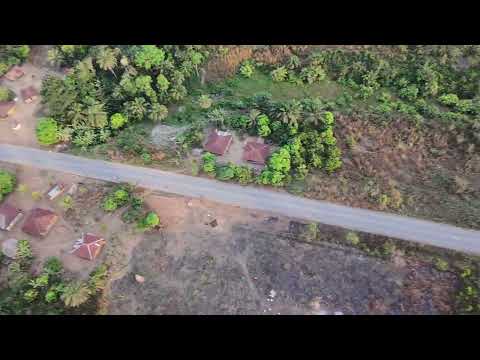
Drone Aerial Flight Mafabaneh: School Building Site
Aerial perspective showcasing the footprint of the planned Learning Hub nestled within rural village surroundings.
▶ Play Video (Theater Mode)YouTube HD
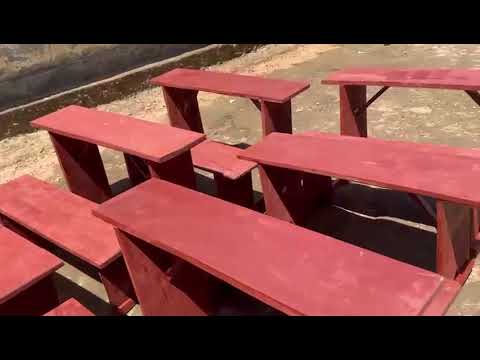
New School Desks & Benches for Mamoru
Through additional private funding, all five rooms are furnished with durable wooden desks for 85 primary students.
3. Living in Masingbi: Immersion in Rural Village Life
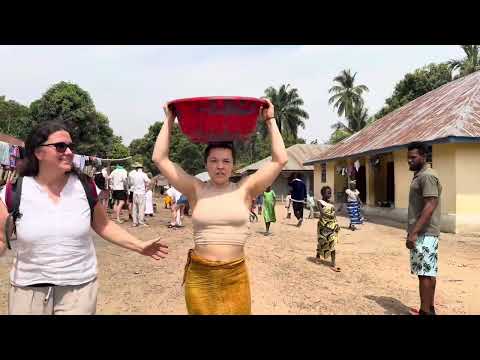
One of the most transformative experiences was the approximately week-long immersion in Masingbi. Instead of staying in tourist hotels, the group lived in the family guesthouse of local co-founder Yoni Sesay. For younger travelers, unfamiliar conditions initially required adjustment, such as bucket bathing rather than modern showers. However, these physical inconveniences quickly faded as the guesthouse evolved into a welcoming shared home through communal open-fire cooking, evening conversations, and memorable rural sunsets. Leaving after the week proved genuinely emotional for participants on both sides.
▶ Play Video (Theater Mode)YouTube HD
5. Village Life in Masingbi & Community Match
Everyday village life: cooking on open fires, community celebrations, a friendly soccer match against local youth, and deep hospitality.
▶ Play Video (Theater Mode)YouTube HD
4. Red Palm Oil Craft & Pineapple Harvest
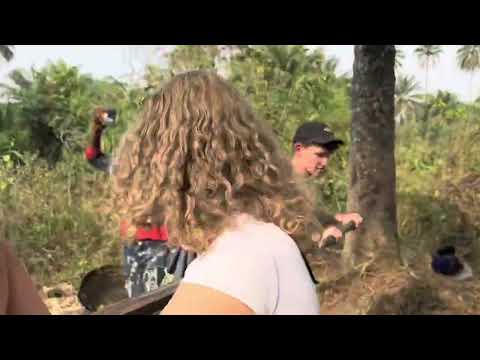
Hands-on traditional craft: boiling and pressing red palm oil and harvesting fresh pineapples on family-run farms.
4. Diplomatic & Official Dialogue in Freetown
In the capital Freetown, the delegation was received by Sierra Leone's Tourism Minister, Nabeela Farida Tunis, and Germany's Ambassador, Dr. Pascal Richter. Minister Tunis strongly commended this innovative travel model, which deliberately departs from isolated resort tourism in favor of community immersion and cultural exchange. Ambassador Dr. Richter similarly lauded the respectful, people-to-people partnership between schools and communities as authentic cultural diplomacy.
5. Freetown: Urban Contrasts & Beyond Stereotypes
Transitioning from the serene interior to metropolitan Freetown exposed participants to the dramatic contrasts of the country. The western peninsula with scenic beaches and coastal hotels contrasts sharply with the high density, bustling commercial markets, and bustling traffic of the eastern city districts. This experience taught a vital educational lesson: Sierra Leone cannot be reduced to a single stereotype of rural quietude, poverty, or wildlife, but is a vibrant, multi-layered society.
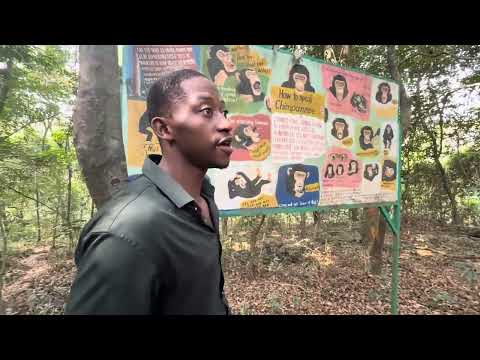
A deeply memorable field excursion led to the renowned Tacugama Chimpanzee Sanctuary in the rainforest hills of Freetown. The sanctuary rescues orphaned and illegally trafficked chimpanzees, providing rehabilitation in natural enclosures. Participants witnessed firsthand both the physical power and sensitive intelligence of humankind's closest living relatives, while exploring the vital links between biodiversity, habitat preservation, and human responsibility.
▶ Play Video (Theater Mode)YouTube HD
6. Wildlife Protection at Tacugama Sanctuary
Field visit to the primate rescue sanctuary in Freetown hills: rescuing chimpanzees from the illegal trade and preserving biodiversity.
7. Historical Education: Slave-Trade Ruins at Kent & Banana Island
One of the most emotionally profound visits occurred at Kent on the southern tip of the Freetown Peninsula. Participants explored stone ruins directly connected to the transatlantic slave trade and learned about the forced transport of enslaved humans by small boats to Banana Island before boarding transatlantic vessels. Encountering these historical grounds made the human tragedy of the slave trade immediately tangible—far more compellingly than textbook pages—and deepened understanding of the historic ties connecting West Africa and Europe.
8. Returning to Comfort: Deep Reflection on Everyday Privileges
Toward the conclusion of the journey, the delegation spent final days at a coastal hotel in Freetown. After ten days of simple village living in the interior, returning to running tap water, cold drinks, and familiar amenities presented a stark contrast. Comforts routinely taken for granted in European daily life became consciously appreciated, encouraging travelers to critically reflect on personal assumptions, consumer habits, and global distribution of resources.
9. Six Core Educational Dimensions
Experiential Learning
Real social, cultural, and ecological realities are encountered directly through hands-on participation rather than abstract theory.
Perspective-Taking
Living alongside people from different cultural and economic realities creates opportunities to examine assumptions and dismantle bias.
Historical Understanding
Direct engagement with slave-trade sites establishes tangible awareness of historical relationships between Europe and West Africa.
Environmental Education
Visiting wildlife conservation projects raises awareness about biodiversity, habitat preservation, and ecological responsibility.
Civic Engagement
Community development projects illustrate how grassroots international partnerships create meaningful local empowerment.
Intercultural Communication
Eye-level dialogue with families, students, and leaders builds bridges across linguistic and cultural boundaries.
10. Conclusion: Sustained Cooperation on an Equal Footing
The central insight from the 2026 journey is that international travel becomes transformative when visitors immerse themselves in everyday community life and forge authentic relationships with local partners. Deliberately navigating contrasts—from rural clay tracks and construction sites to diplomatic audiences and urban markets—the journey replaced simplistic narratives with a nuanced understanding of Sierra Leone’s cultural vitality, deep warmth, and enduring resilience.
Instagram • @bildung.mit.herz
Field Impressions from Sierra Leone: Reels & Photos
For every single location visited across Sierra Leone in 2026, we share authentic reels, stories and photo documentation on our official Instagram channel @bildung.mit.herz:
📍 Masingbi
Village Life & Immersion
Masingbi: Week-Long Community Immersion
Living in co-founder Yoni Sesay's family compound, open-fire cooking, bucket baths, village celebrations, and the community football match against local youth.
Joyous reception with traditional drumming, sacred cornerstone ceremony with the village elder, inspection of the roofed school, and assembling wooden desks for 85 pupils.
Drone aerial flights of the circular building footprint (German Design Award 2027), pressing earth blocks on site, and celebrating peace with neighboring Magbashai.
Field visit to the renowned rainforest sanctuary in Freetown hills: rescuing chimpanzees from illegal poaching, habitat conservation, and primate behavior education.
Examining stone ruins of colonial slave depots, crossing by wooden boat to Banana Island, and reflecting on the human tragedy of transatlantic slavery.
Official reception by Tourism Minister Nabeela Tunis and German Ambassador Dr. Pascal Richter; bustling East Freetown markets and Atlantic peninsula beaches.
Experience our ongoing project milestones, local craftspeople, and educational cohorts in real time. Regular reels and stories direct from Sierra Leone.
We are thrilled to share: The visionary, sustainable school concept for the Mafabaneh Village School in Sierra Leone has been awarded the prestigious German Design Award 2027 by the German Design Council! The design was created pro bono by Tchoban Voss Architekten (Sergei Tchoban) in close partnership with our association.